Too Old to Start BJJ? A Guide for Adult Beginners in London
What to expect as an adult beginner in London, and how our 8-week Beginner's Cohort works.

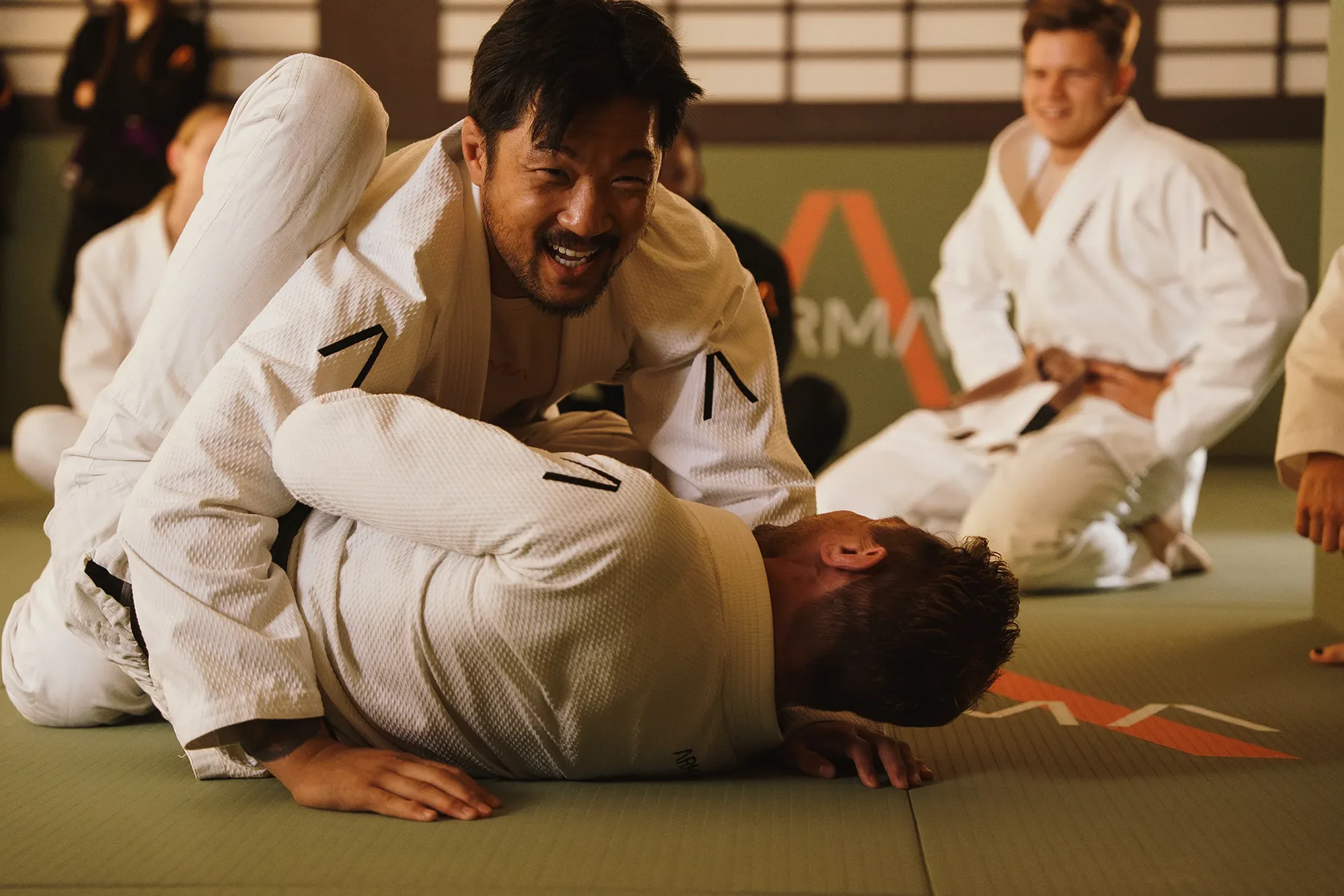
Not everyone who walks into a Brazilian Jiu Jitsu gym for the first time is a 19-year-old athlete. Plenty are professionals in their late 20s, 30s and 40s who have spent years in the gym or on a running route and want something that challenges the mind as much as the body.
If you've been asking yourself whether you've left it too late, this guide is for you. We'll cover what BJJ is actually like for an adult beginner, the worries we hear most often, and how to take the first step at ARMA in Clapham.
Is It Too Late to Start BJJ as an Adult?
No. Brazilian Jiu Jitsu is one of the few martial arts where starting as an adult is completely normal. The art is built on leverage, timing and position rather than size or speed, which is why you'll see people of every age and build training together.
What changes as an adult is how you train, not whether you can. Adult beginners tend to do best when they:
- Focus on learning positions before chasing submissions
- Train consistently rather than intensely
- Build in recovery between sessions
- Choose a gym with a structured beginners program instead of throwing new people straight into open rolling
That last point matters most. A good start is the difference between people who stick with BJJ for years and people who quit after three classes.
Why Adults Start BJJ (and Why They Stay)
Adults come to BJJ for different reasons. Some want a new way to get fit. Some want self-defence skills that actually work. Many want a community that isn't built around a screen or a bar.
What keeps them coming back is usually the problem-solving. Every roll is a puzzle, and you can't think about work emails while someone is trying to pass your guard. If fitness is your main driver, we've covered what the research says about BJJ and fitness in a separate post.
As one of our members, Toni, put it: "I was attracted to ARMA because of the world-class coaches. The community it's attracted is also great."
What Your First Weeks Look Like at ARMA
New adult members with little or no BJJ experience start in our Beginner's Cohort, an 8-week course designed for people with no BJJ experience. It's a complete course split into four two-week blocks, not a run of drop-in classes teaching random techniques.
| Weeks | Focus |
|---|---|
| 1-2 | Closed guard fundamentals, tapping, shrimping, bridging and breakfalls |
| 3-4 | Pins and escapes from side control and mount |
| 5-6 | Back control, back escapes and choke defence |
| 7-8 | Grip fighting, guard pulls and open guard, ready for Fundamentals |
A few things adult beginners usually find reassuring:
You can join at any point in the cycle. You don't have to wait for a new intake.
There's no live rolling in the Cohort. Classes finish with positional sparring, where you work from a set position at a controlled pace. Full rolling starts once you move up to Fundamentals.
Gi and no-gi both run. The Cohort runs as separate gi and no-gi classes with the same curriculum, so you can pick what suits you.
You're training with other beginners. Everyone in the room started recently, which takes a lot of the pressure off.
For a closer look at each block, read Your First 8 Weeks of BJJ at ARMA Clapham.
The Worries We Hear Most from Adult Beginners
"I'm not fit enough yet"
You don't need to get fit before you start. The Cohort's warm-ups and drills are built to bring your conditioning up alongside your technique. Most people find BJJ fitness is different from gym fitness anyway, so everyone starts from a similar place.
"I'm worried about getting injured"
Control and respect for your training partners sit at the centre of how we coach. In the Cohort you learn to tap early, fall safely and work at a controlled pace before you ever roll live. That is one of the main reasons we have the Beginner's Cohort: it helps you avoid injury and makes you less likely to injure your training partners. You can also always choose who you train with, so you only work with people you're comfortable with. If you have an existing injury or health condition, speak to your GP before starting and let your coach know on day one.
"I'll be the oldest or least experienced person there"
In the Beginner's Cohort, everyone is new. Outside the Cohort, you'll find hobbyists, competitors, women and men of different ages and backgrounds training on the same mats. Our Head Coach Ffion Davies is an ADCC and CJI World Champion, and the coaching team's focus at this stage is on fundamentals, not on who's the toughest in the room.
Jack, one of our members, said: "Within 20 minutes of being here I could tell ARMA was different... you literally could not feel more welcome, supported, or at ease."
"I don't have time to train every day"
You don't need to. For adult beginners we recommend two to three sessions a week, which is enough to retain what you learn and still recover properly. Our guide to how often you should train BJJ goes into more detail.
"Recovery takes me longer than it used to"
That's normal, and it's worth planning for. Full Access BJJ members at ARMA can use the sauna and cold plunge, and there's a members' lounge and café on site. See our facilities for more.
How to Start BJJ at ARMA
Book your first Beginner's Cohort session on our Jiu Jitsu for Beginners page, or book a tour if you'd like to look around first.
Bring the basics. Comfortable training clothes with no zips or pockets, water and flip-flops. We'll lend you a gi for your first session and towels are provided. Our post on what to wear to your first BJJ class covers the rest.
Arrive 10 to 15 minutes early so you have time to check in and get changed.
Commit to the full eight weeks. The Cohort is designed as a complete course, and the progress you'll feel between week one and week eight is the best reason to keep going.
Frequently Asked Questions
Is there an age limit for starting BJJ as an adult? No. Adults of all ages train BJJ. What matters more is training consistently, listening to your body and starting in a structured beginners program.
Do I need any martial arts experience? No. The Beginner's Cohort assumes zero prior BJJ knowledge.
How long does it take to get a blue belt? It varies by person and how often you train, but white belt typically lasts one to two years. Our BJJ belt system guide explains each stage.
Can I join the Beginner's Cohort halfway through? Yes. You can join at any point in the eight-week cycle.
What happens after the eight weeks? Most people progress to Fundamentals classes, where live rolling is introduced. You can also repeat the Cohort or talk to a coach about what's right for you.
Can I look around before I sign up? Yes. You can book a tour and ask the team anything before you commit. More answers are on our FAQs page.
Ready to Start?
The best time to start BJJ was years ago. The second best time is this week. Book your first Beginner's Cohort session at ARMA in Clapham and see what you're capable of.