What to Wear to Your First BJJ Class (And What Not to Bring)
Complete guide to what to wear for your first Brazilian Jiu Jitsu class in London. Learn gi etiquette, what to avoid and how to prepare at ARMA Clapham.


One of the most common questions from people booking their first Brazilian Jiu Jitsu class in London is surprisingly simple: "What do I wear?"
It's a fair question. Walking into ARMA in Clapham for the first time is nerve-wracking enough without worrying whether you've dressed appropriately or brought the wrong things. This guide removes that uncertainty and ensures you arrive prepared, comfortable and ready to train.
If you're still deciding whether BJJ is right for you, start with our complete beginner's guide to Jiu Jitsu in London.
What to Wear: Your First Class at ARMA
For Your Very First Trial Session
You don't need to buy anything before your first class.
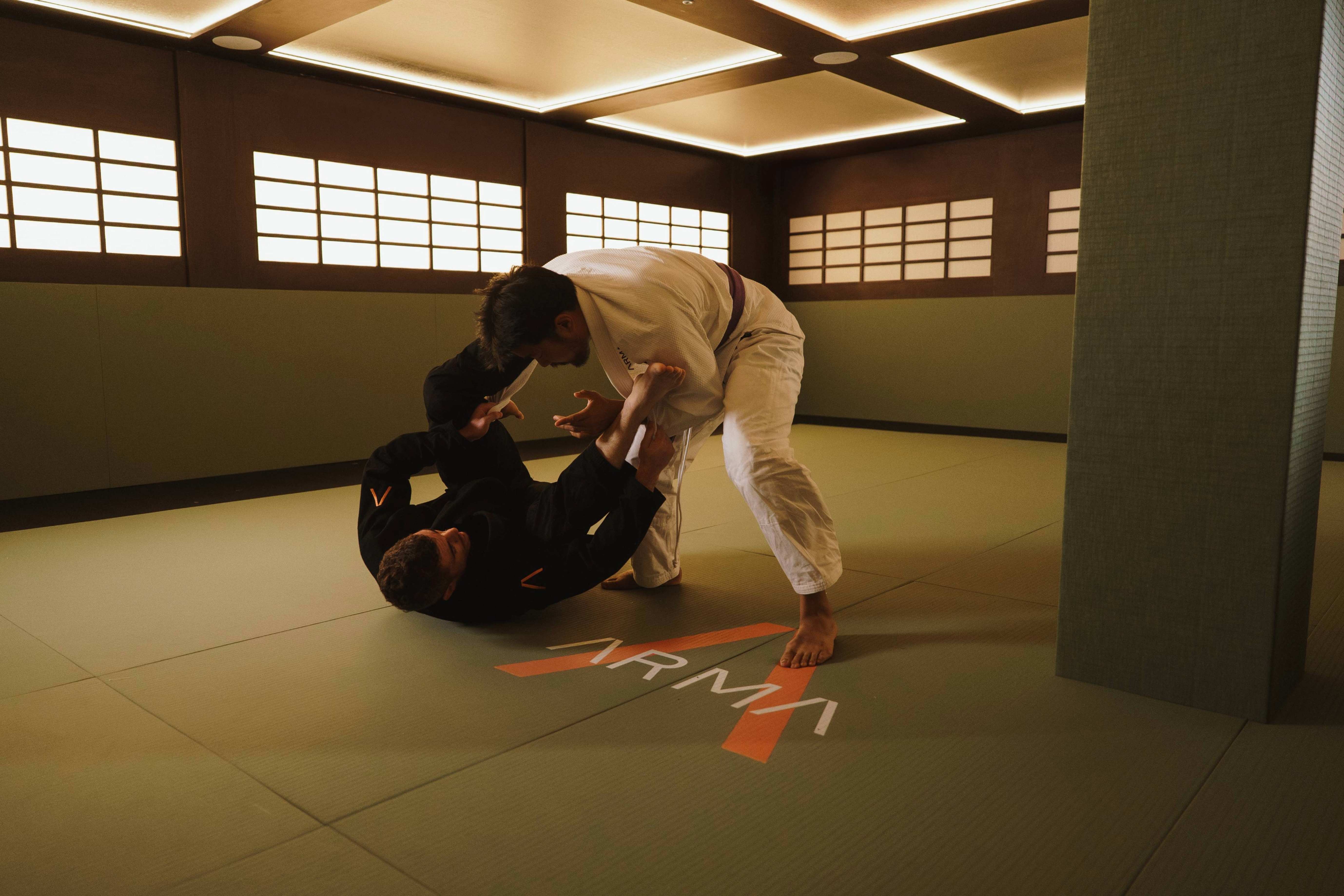
At ARMA, we provide a complimentary loan gi for your first trial session only. You can arrive in the gym clothes specified below, and we'll provide the gi. This removes the barrier of buying expensive equipment before you've even decided if BJJ is for you.
What to wear under the loan gi or for no-gi training
Men:
- Gi training: Compression shorts and a skintight shirt under the gi
- No-gi training: Compression shorts and athletic shorts worn over them
Women:
- Gi training: Supportive sports bra (nothing too loose), rash guard or fitted athletic top, and leggings or skintight compression shorts under the gi
- No-gi training: Supportive sports bra (nothing too loose), skintight long or short-sleeve shirt, and leggings or skintight compression shorts
General rules for all training
- No zips, buttons or pockets (these can catch fingers and toes)
- Avoid spaghetti straps or crop tops (they shift during training)
- Wear clothes you don't mind sweating in (BJJ is physically demanding)
Understanding the Gi (Brazilian Jiu Jitsu Uniform)
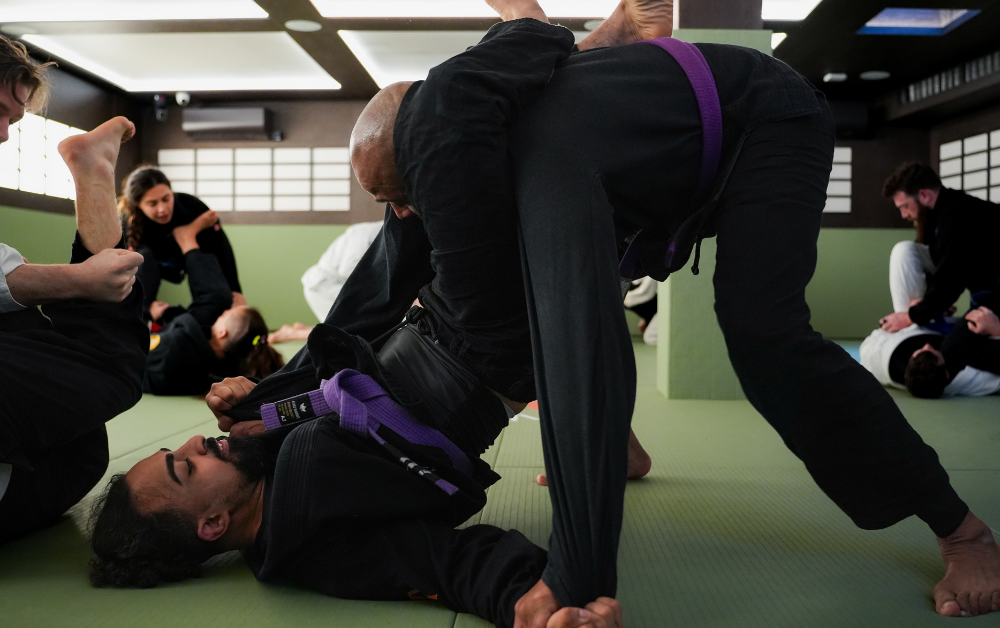
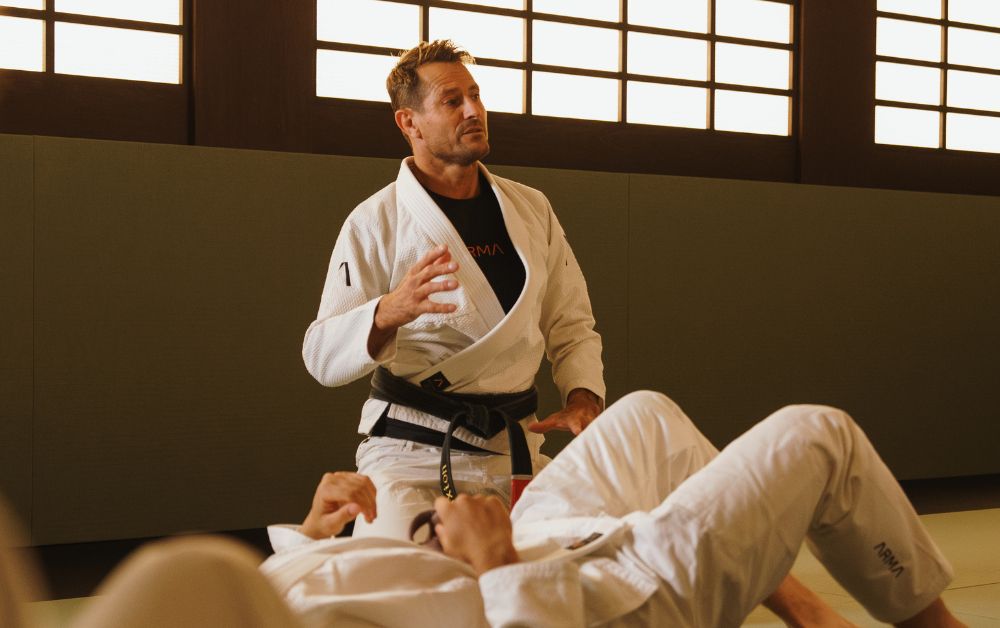
Once you've decided to continue training beyond your trial, you'll need your own gi. A gi consists of three parts:
- Kimono (jacket) – a thick, durable top designed to withstand gripping and pulling
- Trousers – drawstring pants made from reinforced fabric
- Belt – indicates your rank (all beginners start with a white belt)
What Makes a BJJ Gi Different?
Unlike karate or taekwondo uniforms, a Brazilian Jiu Jitsu gi is built for grappling. It needs to be:
- Durable – designed to handle constant pulling and gripping
- Fitted – not too loose (can be grabbed easily) or too tight (restricts movement)
- Reinforced – strengthened knees, collar and lapel to prevent tearing
At ARMA, we sell gis onsite and can guide you on sizing when you're ready to purchase. You don't need to rush this, use our loan gi for your trial, then we'll help you choose the right size and fit when you commit to training.
Understanding No-Gi Training
No-gi Brazilian Jiu Jitsu is trained without the traditional gi uniform. Instead, practitioners wear athletic clothing that allows freedom of movement whilst preventing fabric from being grabbed.
What Makes No-Gi Different?
No-gi training focuses on:
- Speed and mobility – without gi grips, movements are faster and more dynamic
- Body control – grips are on wrists, ankles, and body instead of fabric
- Different techniques – submissions and positions adapt to the lack of gi grips
The clothing requirements are simple: tight-fitting athletic wear that won't shift, bunch up, or get in the way during training.
What to Wear Under Your Gi
This is where beginners often get confused. What you wear under your gi matters for comfort, hygiene and practicality.
Recommended: Rash Guard
A rash guard is a tight-fitting, moisture-wicking top worn under your gi jacket. It:
- Prevents friction burns and mat rash
- Wicks sweat away from your skin
- Dries quickly between rounds
- Reduces the risk of skin infections
Rash guards are designed specifically for grappling and are worn by the majority of BJJ practitioners at ARMA. You can purchase rash guards at the club.
Acceptable Alternative: Fitted Athletic Top
If you don't have a rash guard yet, a fitted athletic t-shirt is acceptable for your first few weeks. Avoid:
- Heavy cotton t-shirts (they absorb sweat and become heavy)
- Baggy shirts (they bunch up and get in the way)
- Old shirts with holes or loose seams (safety hazard)
Sports Bra for Women
Women must wear a supportive sports bra under their rash guard or athletic top. Avoid anything too loose, as this will be uncomfortable during training.
What to Wear on Your Lower Half
Men (Gi training): Compression shorts under your gi trousers
Men (No-gi training): Compression shorts and athletic shorts worn over them
Women (Gi training): Leggings or skintight compression shorts under your gi trousers
Women (No-gi training): Leggings or skintight compression shorts
Avoid wearing just underwear under your gi trousers or no-gi shorts. Proper compression layers are essential for hygiene and comfort.
What to Bring to Your First BJJ Class
Essential Items
1. Water Bottle
BJJ is thirsty work. Bring a full water bottle and keep it at the edge of the mats. You'll drink more than you expect.
2. Flip-Flops or Slides
You'll remove your shoes before stepping on the mats, but you'll need footwear to walk to the changing rooms or toilet. Flip-flops are standard in every BJJ gym in London.
3. Towel (Optional)
For wiping sweat between rounds. We provide complimentary towels at the club, but you're welcome to bring your own if you prefer.
Useful Items
4. Mouthguard
Not essential for beginners, but recommended once you start sparring regularly. Protects your teeth during positional work.
5. Spare Clothes
You'll work up a sweat after class. Bring fresh clothes to change into, especially if you're commuting home on public transport in London.
What NOT to Bring (Or Wear)
Understanding what to avoid is just as important as knowing what to bring.
Never Wear:
Jewellery
Rings, necklaces, bracelets, watches and earrings must all be removed before training. They can injure you or your training partner during grappling. If you have piercings you can't remove, cover them with athletic tape.
Shoes or Socks on the Mats
BJJ is trained barefoot. Socks reduce grip and can cause you to slip. Shoes track dirt and bacteria onto the mats, which is why they're strictly prohibited.
Perfume or Cologne
You're training in close proximity to others. Strong scents can trigger headaches or allergies. Deodorant is fine (and encouraged), but skip the fragrance.
Clothes with Zips, Buttons or Metal Parts
These can scratch your training partners, damage the mats or catch on fingers and toes during movement.
Heavy Makeup
It will smudge onto your gi, your training partner's gi and the mats. Also, sweating heavily in makeup isn't comfortable.
What Not to Bring:
Your Ego
BJJ has a steep learning curve. No one expects you to be good on day one. Leave comparisons and competitiveness at the door, focus on learning.
Expectations of Perfection
You will forget techniques. You will feel clumsy. You will tap repeatedly. This is normal and expected. Progress in BJJ is measured in months and years, not sessions.
Hygiene and Etiquette: The Unwritten Rules
Good hygiene isn't just polite, it's essential in a close-contact sport like Brazilian Jiu Jitsu.
Before Training:
- Shower before class (especially if you're coming straight from work)
- Trim your fingernails and toenails short
- Tie long hair back securely
- Brush your teeth or use mouthwash (you'll be training face-to-face with partners)
- No chewing gum on the mats
After Training:
- Wash your gi and no-gi gear after every single session (bacteria thrives in damp fabric)
- Shower as soon as possible after class
- Ask our reception team for a wet kit bag so your damp clothes don't sit in your gym bag
At ARMA, we maintain premium facilities including showers, changing rooms and a members' lounge. You can shower before or after training, and we provide a clean, professional environment that reflects the level of care we expect from members.
Explore ARMA's facilities in Clapham.
Your First Class: What Happens When You Arrive
Knowing what to expect when you walk through the door helps reduce first-day nerves.
1. Arrive 10–15 Minutes Early
This gives you time to check in, change and meet your coach before class starts.
2. Introduce Yourself
Let the coach know it's your first session. They'll keep an eye on you during class and answer any questions.
3. Step Onto the Mats Barefoot
Remove your shoes and socks before stepping on the mats. This is non-negotiable in every BJJ gym.
4. Listen and Ask Questions
Coaches expect beginners to need clarification. If something doesn't make sense, ask.
If you want to understand what your first few weeks will look like, read our week-by-week guide to your first 8 weeks of BJJ at ARMA.
How Much Does a Gi Cost?
A beginner-friendly gi typically costs between £50–£100.
At ARMA, we offer gis onsite and can help you choose the right size and fit when you're ready to purchase. There's no rush to buy your own gi in your first week, use our complimentary loan gi for your trial session, then speak to our team when you're ready to invest.
Ready to Start Training?
Now you know exactly what to wear, what to bring and what to leave at home. The logistics are sorted. All that's left is showing up.
At ARMA in Clapham, we make it easy for complete beginners to start Brazilian Jiu Jitsu with confidence. You don't need your own gi, you don't need to be fit and you don't need any prior experience. Show up. Train. See what happens next.
You can: