Your First 8 Weeks of BJJ at ARMA Clapham
What to expect in your first 8 weeks of beginner Brazilian Jiu Jitsu at ARMA Clapham. Week-by-week breakdown, common challenges and how to progress.

Starting beginner Brazilian Jiu Jitsu in London can feel overwhelming. You walk into ARMA in Clapham, see experienced grapplers moving fluidly across the mats and wonder: "How long until I can do that?"
The truth is, progress in BJJ doesn't happen overnight. But it does happen consistently, especially in your first eight weeks. At ARMA, the Beginners Cohort is specifically designed as an 8-week structured course that takes you from complete novice to confident enough to join Fundamentals classes.
This guide breaks down what you'll learn in each phase, the challenges most beginners face and how to navigate them with confidence.
If you're thinking about starting, read our complete beginner's guide to Jiu Jitsu in London first.
Understanding the Beginners Cohort Structure
The Beginners Cohort at ARMA is an 8-week programme split into four 2-week blocks. Each block focuses on specific positions, techniques and concepts that build on what you've already learnt.
Key points about the structure:
- It's a complete course, not drop-in classes teaching random techniques each week
- The curriculum assumes zero prior BJJ knowledge
- Warm-ups and lessons teach all the fundamental movements and safety practices needed to train without injury
- After completing one 8-week cycle, you're recommended to progress to Fundamentals classes
The Beginners Cohort runs in both gi and no-gi formats as separate classes. The curriculum is the same, but the techniques adapt to the differences between gi and no-gi training.
Check the ARMA Timetable for Beginners Cohort class times.

Weeks 1-2: Closed Guard Fundamentals
What You'll Learn
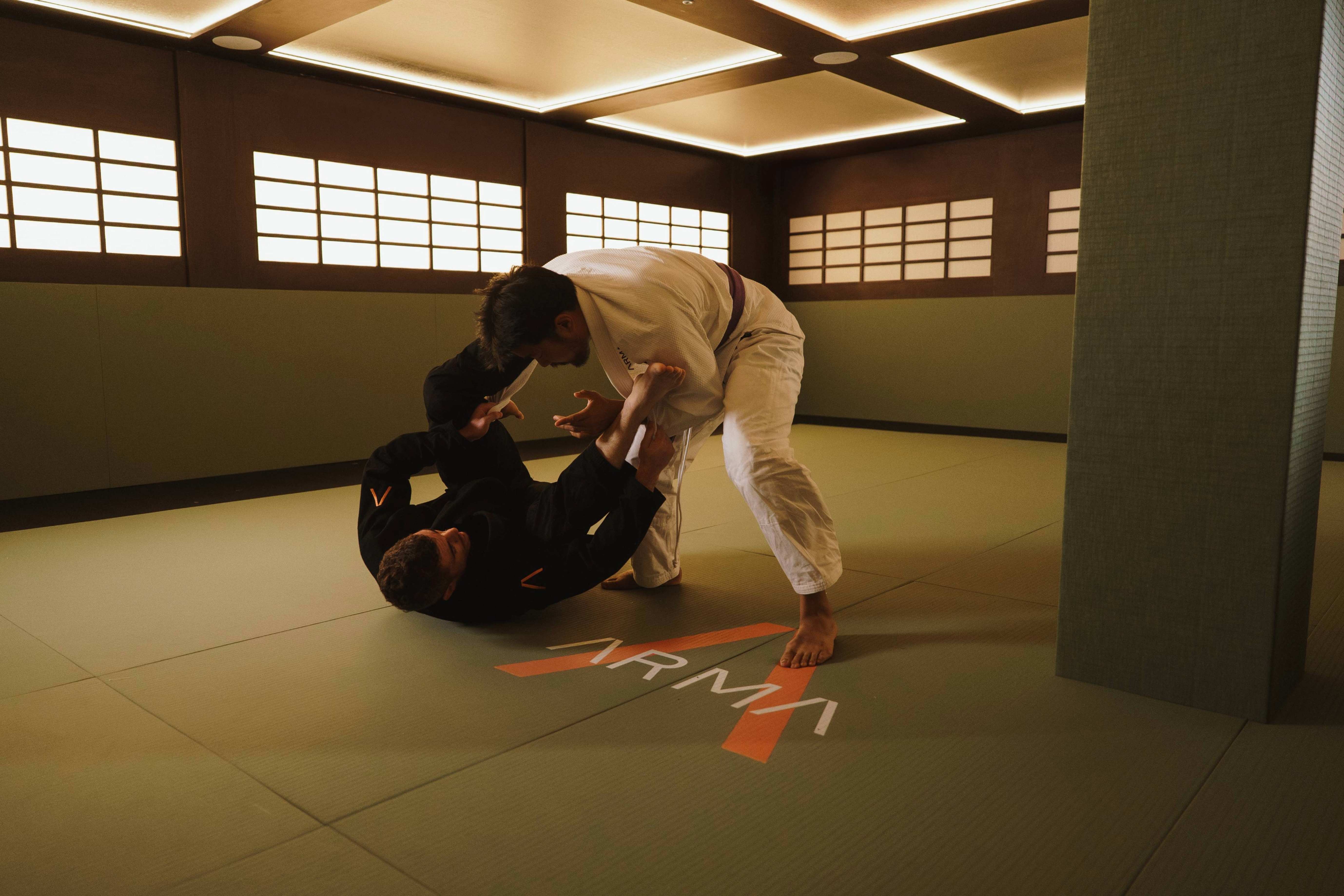
Your first two weeks introduce you to closed guard – one of the most fundamental positions in BJJ. You'll learn:
- Closed guard basics: How to control someone between your legs
- Escaping closed guard: How to open your opponent's guard and create space
- Half guard passes: Introduction to passing someone's legs to advance position
- How to tap: The single most important skill in BJJ (signalling submission)
- Fundamental movement patterns: Shrimping, bridging, breakfalls
What You'll Feel
Overwhelmed. There's a lot of information coming at you, and none of it will stick right away. You might forget everything you learnt by the time you walk off the mats. That's completely normal.
Tired. BJJ uses muscles you didn't know existed. Even light drilling will leave you sore in unexpected places – neck, forearms, hips, core.
Nervous. Walking into a room full of people who know what they're doing is intimidating. But within a session or two, you'll realise everyone at ARMA started exactly where you are now.
Common Challenges
- Forgetting technique immediately: Your brain is in overload. Don't expect perfect retention in week one.
- Feeling clumsy or uncoordinated: Grappling is a completely new movement pattern. It takes time.
- Comparing yourself to others: Don't. Focus on your own learning curve.
How to Succeed
Show up consistently. Attend 2-3 sessions per week if possible. Consistency beats perfection in your first two weeks.
Weeks 3-4: Pins and Escapes
What You'll Learn
Weeks 3-4 shift focus to control positions (pins) and how to escape them:
- Side control: How to hold someone down and how to escape when you're underneath
- Mount: Controlling from the top and attacking with submissions
- Mount escapes: Getting out when someone's sitting on your chest
- Back takes: Transitioning to the back from side control and mount
- Submissions: Introduction to armbars, triangles, Americana and kimura
What You'll Feel
Less lost. You'll start recognising positions and understanding why certain movements work. Things click, even if only for a moment.
More tired. As your body adapts, you'll train slightly harder without realising it. Recovery becomes important – hydration, sleep and stretching all matter now.
Frustrated. You'll hit your first major sticking point. Maybe you can't escape side control. Maybe you keep getting swept. This is where most people consider quitting. Don't.
Common Challenges
- Plateauing early: You're not plateauing, you're consolidating. Progress isn't always linear.
- Feeling like you're "bad at this": Everyone does. BJJ has a steep learning curve by design.
- Worrying you're too slow/weak/unfit: You're not. You're just new.
How to Succeed
Ask questions. ARMA coaches expect beginners to need clarification, and training partners are used to explaining techniques. If something doesn't make sense, speak up.
Weeks 5-6: Back Control and Attacks
What You'll Learn
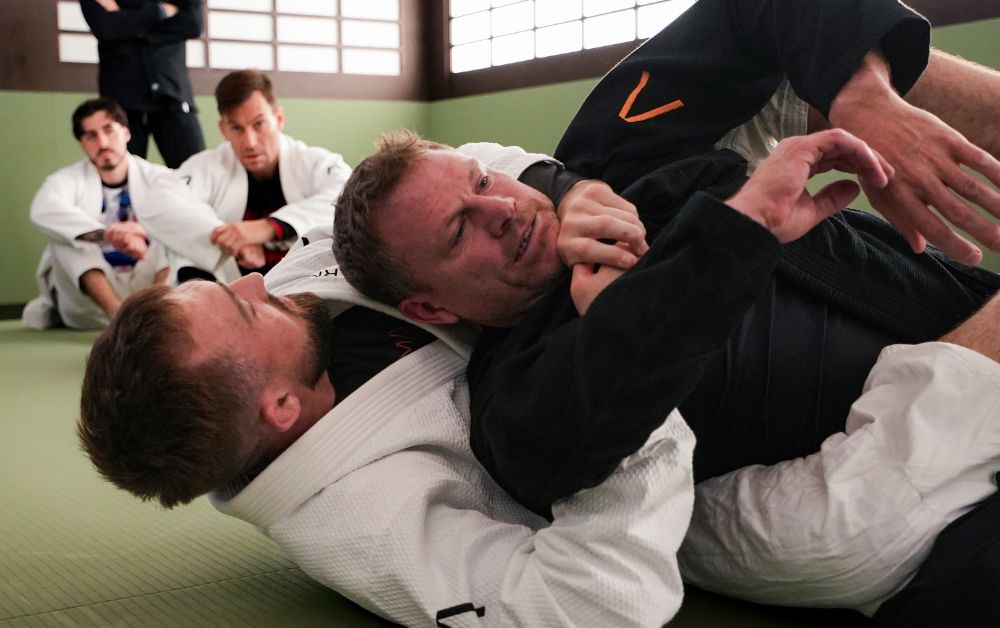
Weeks 5-6 focus on back control – widely considered the most dominant position in BJJ:
- Back takes: How to get to someone's back from various positions
- Back control: Maintaining position when you have someone's back
- Back escapes: How to defend and escape when someone has your back
- Back attacks: Submissions from the back (primarily chokes)
- Defence against chokes: How to protect your neck
What You'll Feel
Confidence. Not cockiness, just the quiet realisation that you're starting to understand what's happening. You can predict movements before they happen. You can feel when someone's off-balance.
Addicted. This is when most people "fall into" BJJ. It becomes less about surviving class and more about actually enjoying the process.
Still tired. But it's a productive tired now. Your body is adapting, your cardio is improving and you're moving more efficiently.
Common Challenges
- Overtraining enthusiasm: You feel good, so you want to train every day. Don't. Rest is part of progress.
- Getting caught in the same submissions repeatedly: This is how you learn. Every tap is data.
- Imposter syndrome: "Everyone else is better than me." Yes. They've been training longer.
How to Succeed
Start taking notes after class. Write down one or two things you learnt or struggled with. This helps retention and gives you specific questions to ask next session.
Also, explore ARMA's full membership options if you haven't already committed to regular training.
Weeks 7-8: Initiating the Fight and Open Guard
What You'll Learn
The final two weeks prepare you to transition into Fundamentals classes:
- Grip fighting: How to control hand position before techniques begin
- Taking the fight to the ground: Throws and guard pulls (how to start grappling)
- Open guard: Controlling someone with your legs when they're standing or kneeling
- Integration with Fundamentals curriculum: Week 7-8 content matches what's being taught in Fundamentals, so the transition feels seamless
What You'll Feel
Capable. Not skilled yet, but capable. You can survive a round without panicking. You can recognise when you're in danger and attempt an escape. You understand the game now, even if you're still losing most exchanges.
Excited about the journey ahead. Eight weeks in, most people realise they want to keep training long-term. This isn't just a fitness phase, it's a skill worth building.
Sore in new places. Your body is still adapting. Fingers, wrists and hips take time to strengthen. Listen to your body and rest when needed.
Common Challenges
- Wondering when you'll be "good": Define "good." If it means competent, you're already on your way. If it means competitive, that takes years. Enjoy the process.
- Comparing yourself to other beginners who started at the same time: Everyone progresses at different rates. Focus on your own path.
- Nervous about moving to Fundamentals: This is normal and expected. The coaches prepare you specifically for this transition.
How to Succeed
Reflect on where you were in week one. You've learnt an enormous amount in eight weeks. Most people underestimate their own progress because they're focused on how much they still don't know.
What Happens After Week 8?
After completing the 8-week Beginners Cohort, you have options:
Option 1: Progress to Fundamentals Classes
Highly recommended if you have no prior BJJ background. After 8 weeks, you'll have the foundation needed to train safely and effectively in Fundamentals.
What's different in Fundamentals:
- Live rolling (free sparring) is included at the end of class
- More advanced techniques and variations
- Faster-paced instruction (coaches assume you know the basics)
- Training with all belt levels (white belt to black belt)
Fundamentals classes are still welcoming and supportive – everyone helps beginners – but they move quicker because the assumption is you've completed Beginners Cohort or have equivalent experience.
Option 2: Repeat the Beginners Cohort
Some people choose to complete a second 8-week cycle before moving to Fundamentals. This is perfectly fine if:
- You want more repetition on the fundamentals
- You're not ready for live rolling yet
- Your schedule only allowed 1-2 sessions per week, and you want more mat time
Option 3: Speak with Coaches
If you're unsure whether you're ready for Fundamentals, talk to the coaches. They can assess your readiness and recommend the best path forward.
Special case: If you're joining ARMA with prior BJJ experience from another gym, coaches may recommend you skip Beginners Cohort and go straight to Fundamentals.
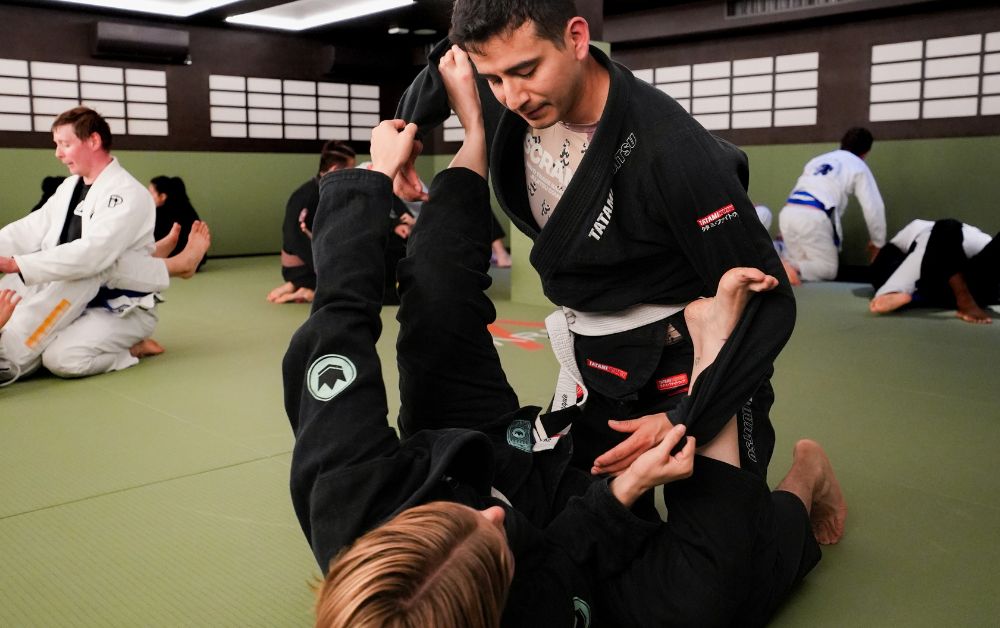
Why the Beginners Cohort Structure Matters
Many BJJ gyms throw new people straight into mixed-level classes and hope they figure it out. ARMA's structured 8-week approach is different.
Benefits of the Beginners Cohort:
- Assumes zero knowledge: Coaches explain everything from scratch, including basic movements and safety
- Teaches injury prevention: Proper warm-ups, breakfalls and movement patterns reduce injury risk
- Builds confidence gradually: You're not thrown into live rolling on day one
- Creates a cohort: You'll train alongside people who started around the same time, which builds camaraderie
- Prepares you for Fundamentals: By week 7-8, the curriculum aligns with Fundamentals so the transition is smooth
Without this foundation, new students often feel overwhelmed in Fundamentals classes. Training alongside black belts is intimidating if you don't know basic positions or safety habits. The faster pace means coaches can't answer basic questions, and other students end up teaching – which isn't ideal for anyone.
The Beginners Cohort ensures everyone has the same foundation before progressing.
Gi vs No-Gi: What's the Difference?
The Beginners Cohort is offered in both gi and no-gi formats as separate classes.
The curriculum is the same – you'll learn the same positions and concepts each week – but the execution differs:
- Gi training: Grips on the jacket and trousers, slower pace, more control-based
- No-gi training: Grips on wrists, ankles and body, faster pace, more scrambling
Both are valuable. Many students train in both formats from the beginning.
Learn more about what to wear for gi and no-gi training.
How Often Should You Train in the Beginners Cohort?
Recommended frequency: 2-3 times per week
Training this often allows you to:
- Remember techniques between sessions (1x per week is too infrequent for retention)
- Build fitness gradually without overtraining
- Complete the 8-week cycle in roughly 2 months
Can you train more? Yes, but be cautious. Your body is adapting to entirely new movement patterns. More than 4 sessions per week as a complete beginner often leads to burnout or injury.
What if you can only train once per week? You'll still progress, but it will take longer. Consider doing two 8-week cycles before moving to Fundamentals.
Common Questions About the Beginners Cohort
"What if I join in week 3? Do I have to wait until the next cycle starts?"
No. You can join at any point in the 8-week cycle. However, it's highly recommended to complete a full cycle before progressing to Fundamentals. If you join mid-cycle, plan to continue into the next cycle to cover the weeks you missed.
"Do I have to move to Fundamentals after 8 weeks?"
No. You can stay in Beginners Cohort as long as you want. But most people are ready and excited to progress after one cycle.
"What if I'm still nervous about live rolling after 8 weeks?"
That's okay. You can continue in Beginners Cohort (which has positional sparring but no live rolling) until you feel ready. Or, you can attend Fundamentals and sit out the live rolling portion initially – many people do this.
"Can I train both gi and no-gi in the Beginners Cohort?"
Yes. Many students attend both gi and no-gi classes. The curriculum is aligned, so you'll reinforce the same concepts in different contexts.
Ready to Start Your First 8 Weeks?
If you're based in Clapham or South West London and you're ready to begin beginner Jiu Jitsu, ARMA's Beginners Cohort offers a structured, safe and supportive pathway designed specifically for people with no experience.
Your first eight weeks won't be easy. But they will be worth it.
You can: