BJJ Belt System Explained: Your Path from White to Black Belt
Learn the BJJ belt ranking system from white to black belt. Understand IBJJF progression, time requirements, and what each belt means at ARMA Clapham.

Understanding the BJJ Belt System
Brazilian Jiu Jitsu has one of the most respected ranking systems in martial arts. Unlike most combat sports, BJJ belts aren't awarded quickly - they reflect genuine technical ability, mat time and consistent dedication. From white to black belt, the progression is designed to take years, not months.
If you're new to BJJ or thinking about starting, this guide covers everything you need to know: the adult belt ranks, what each one represents, how long it typically takes, and how the kids' system works.
Thinking about starting? Learn more about Jiu Jitsu for Beginners at ARMA or check out our Brazilian Jiu Jitsu classes at ARMA.
The Five Adult BJJ Belts
Adult practitioners (16+) progress through five main ranks:
White - Blue - Purple - Brown - Black
Each belt represents a significant step in technical ability and mat awareness. All ARMA promotions follow IBJJF standards, meaning your rank is recognised globally.
White Belt (1-2 Years)
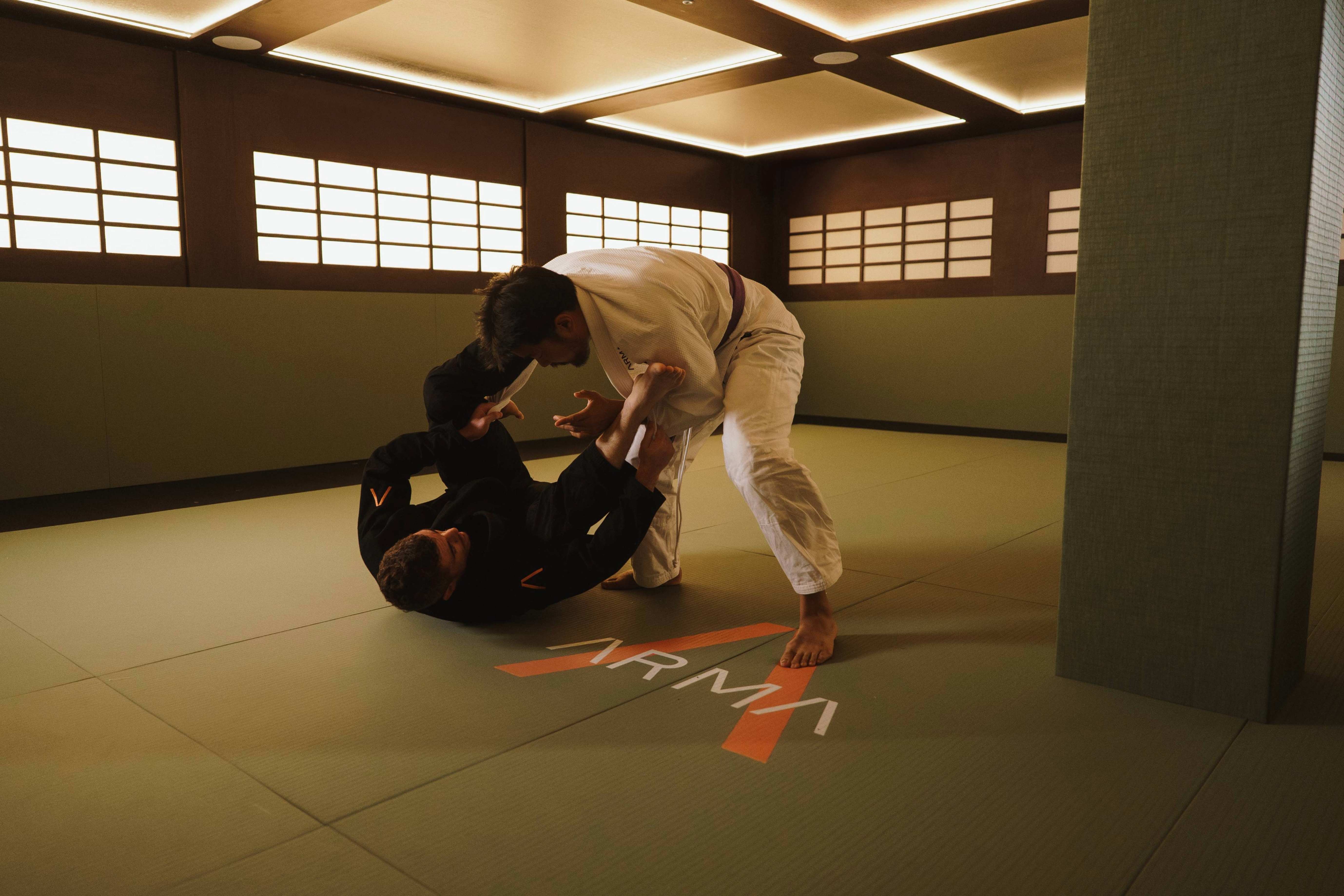
Every BJJ practitioner starts here, regardless of background. White belt is about learning the fundamentals - basic positions, escapes, sweeps, and core submissions like armbar, triangle and rear naked choke.
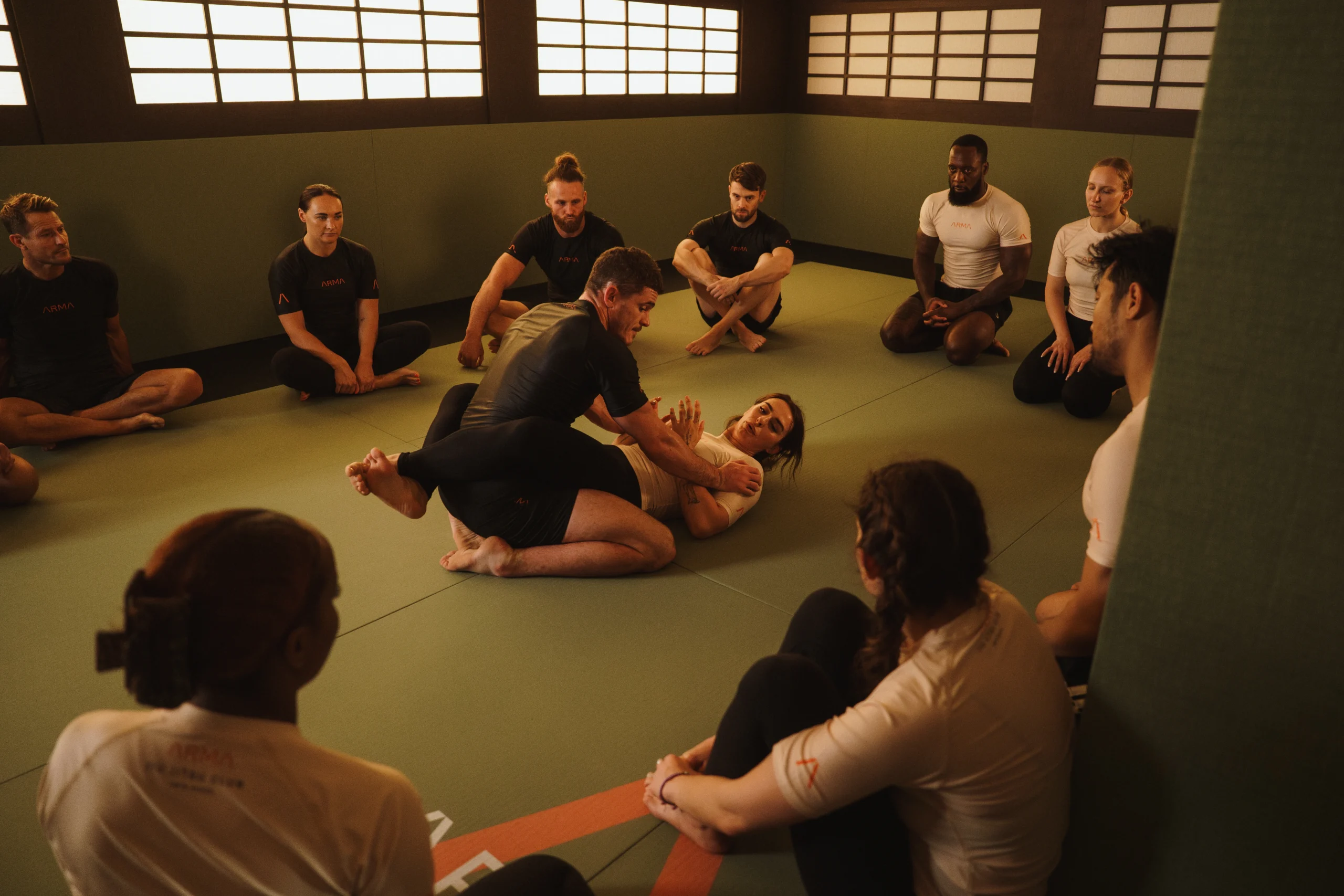
At ARMA, beginners start with the Beginners Cohort - an 8-week structured program covering fundamental positions, safe movement, and controlled sparring in a supportive environment. You transition to open classes once you've built the foundational skills, so you're never thrown in the deep end.
Blue Belt (2-4 Years)
Earning your blue belt means you've moved beyond beginner. You can execute fundamentals reliably, survive against training partners, and you're starting to develop preferences for certain positions or submissions.
Blue belt is often the hardest to push through - this is what's known in the BJJ community as the "blue belt blues." The beginner excitement has worn off, progress feels slower, and higher belts still seem miles ahead. Those who stick it out usually find this is where BJJ becomes genuinely rewarding - your game starts to take shape.
Most people spend the longest time at blue belt. It's where the bulk of your technical foundation is built.
.png)
Purple Belt (1.5-3 Years)
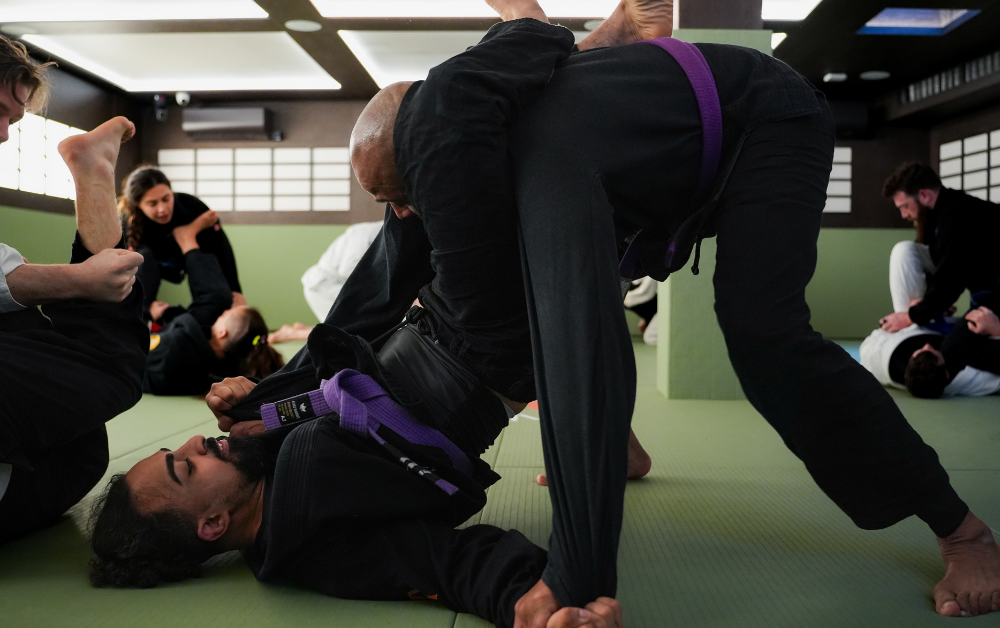
Purple belt is where things start clicking. You've drilled the fundamentals long enough that a personal style begins to emerge - preferred guards, passing approaches, submission chains that suit how you move.
Purple belts are technical enough to be dangerous training partners. You can teach and explain techniques to lower belts, your timing sharpens, and positions that once felt chaotic start to feel controlled.
Brown Belt (1-3 Years)
Brown belt is the final stage before black. You're no longer reacting - you're controlling the pace, setting traps, and consistently ahead of less experienced grapplers. Brown belts are expected to be technical leaders in the gym.
Black Belt (10-15 Years Total)
In BJJ, the black belt is often called the beginning, not the end. It signals mastery of fundamentals and the tools to keep evolving - not that learning is over.
On average it takes 10-15 years of consistent training to reach black belt. Key factors include training frequency, quality of coaching, competition experience, and long-term consistency.
At ARMA, you train under black belts who compete at the highest levels globally, including Ffion Davies (ADCC and CJI World Champion), Sam Gibson (IBJJF European Championship medallist), Ana Lopez (World and European Champion), Nia Blackman (2x World Champion, 4x European Champion), and several other elite instructors.
Quality coaching won't make the journey shorter, but it means every session is spent learning correctly.
Black Belt Degrees
A black belt isn't a single static rank. Over a career, black belts can progress through up to ten degrees, marked by red bars added to the belt for the first six degrees, roughly every 3 years for the first three and every 5 years after that. Beyond that, the timeline stretches considerably: around 31 years as a black belt earns the 7th degree, marked by a red-and-black "coral" belt, and a further decade or so leads to the 8th degree red-and-white coral belt. The 9th and 10th degree red belt sits at the very top and has only ever been awarded to a handful of the sport's pioneers. Degrees recognise sustained contribution to BJJ over decades, not just technical ability.
Explore the ARMA coaching team.
Belt Stripes
Between promotions, coaches award up to four stripes to mark progress. Stripes reflect consistent attendance, technical improvement and readiness to move toward the next belt. They're not standardised across gyms - what matters is the development they represent, not the count itself.
Kids Belt System
Children follow a separate system designed for ages 4-15:
White - Grey - Yellow - Orange - Green
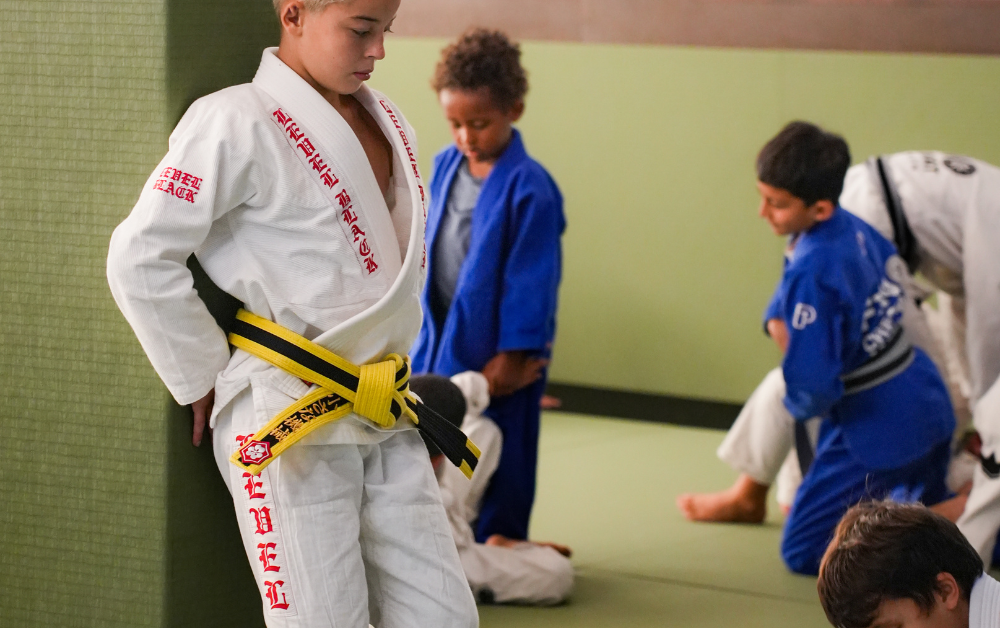
Each colour has three variations: white bar, solid colour, and black bar, giving more frequent milestones to keep young grapplers motivated. In the year of their 16th birthday, kids will transition into the adult belt system.
The Young ARMA's (ages 4-16) program is taught by Richard Manson, a black belt with over a decade of experience coaching children and a 5x English Open gold medallist. The curriculum focuses on confidence, discipline, body awareness and fundamental technique in an age-appropriate environment.
Learn more about Young ARMA's | ARMA Teens
Common Questions
Can you skip belts?
Rarely. Practitioners with extensive grappling backgrounds (wrestling, judo, sambo) may sometimes skip white or blue, but most progress through each rank.
How do you get promoted faster?
Winning consistently at high-level competitions is the clearest path to promotion ahead of the typical timeline. Outside of that, consistent training over years is the only real answer - there are no shortcuts to a legitimate black belt.
Do belts matter?
They mark genuine milestones and give structure, but consistent training and showing up matters more than the colour around your waist.
How long does it take to get a blue belt in BJJ?
Most practitioners earn their blue belt in 2-4 years of consistent training. There's no fixed timeline in the IBJJF rules - promotion depends on technical ability, mat time and your coach's assessment, not time served alone. Training 3+ times a week consistently tends to track toward the faster end of that range.
What is the order of BJJ belts?
Adult BJJ belts run White, Blue, Purple, Brown, Black. That's five ranks, recognised globally under IBJJF standards. ARMA's kids belts (ages 4-15) run on a separate system: White, Grey, Yellow, Orange, Green.
How many BJJ belts are there in total?
Five adult belts (White to Black), each with up to four stripes in between. Black belt itself then has its own degree system - black belts can be awarded up to ten degrees over a career, marked with red bars on the belt, recognising decades of continued contribution to the sport.
What does each stripe mean in BJJ?
A stripe marks progress within a belt, not a new rank. Most gyms award up to four stripes before the next belt promotion. They're not standardised between academies, so a 2-stripe blue belt at one gym isn't necessarily equivalent to a 2-stripe blue belt at another. What matters is the development behind it, not the count.
What is the fastest belt to get in BJJ?
White belt, by definition, since everyone starts there. After that, there's no genuinely "fast" belt. Blue belt is the quickest realistic promotion (2-4 years) simply because it's the first rank up. From blue belt onwards, timelines lengthen rather than shorten as technical expectations increase.
Start Your Belt Journey at ARMA
Whether you're stepping on the mats for the first time or working toward your next stripe, the path is the same: show up, train hard, stay humble.
Check the Timetable - Explore the Facilities - Book Your First Session