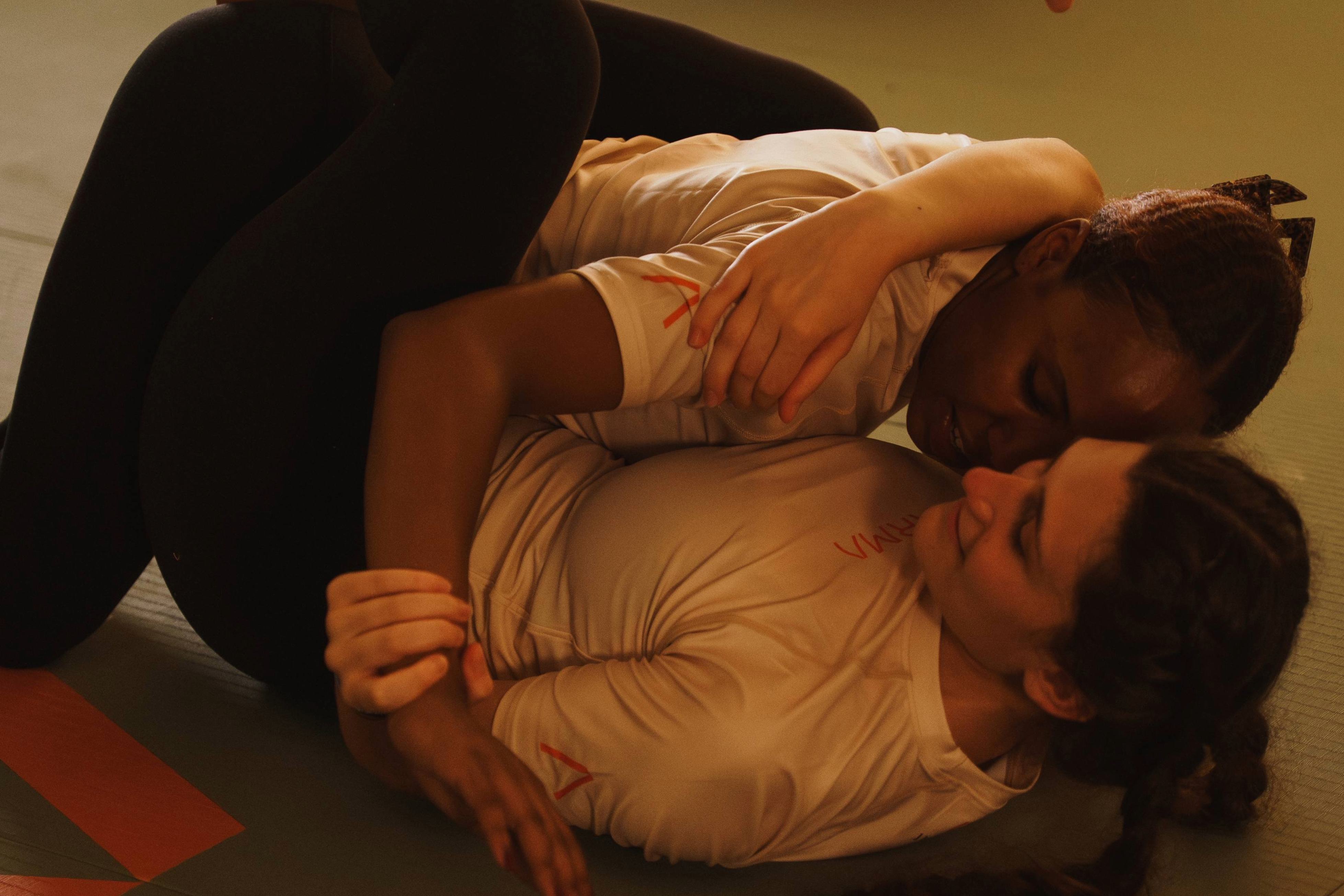
Women's Brazilian Jiu Jitsu in London: The Complete Guide
Everything you need to know about starting BJJ as a woman in London. Real talk on training, safety, self-defence and building strength at ARMA.


Brazilian Jiu Jitsu is one of the fastest-growing martial arts for women in London and across the UK. The reasons are simple: BJJ builds real self-defence skills, develops physical and mental strength, and is designed around technique rather than size or power.
But walking into a BJJ gym for the first time as a woman often comes with questions that male practitioners rarely consider. Is it safe? Will I be the only woman there? What if I'm not strong or fit enough?
This guide answers those questions honestly. No marketing fluff, no glossing over the hard parts. Just facts, practical advice and real talk about what it's like to train women's Brazilian Jiu Jitsu in London.
If you're based in Clapham or South West London and want to start training, learn more about beginner Jiu Jitsu at ARMA.
The Women's Fundamentals class at ARMA
- Day/time: Fridays, 12:30pm (1 hour)
- Location: Dojo 1
- Instructor: Frankie Renda
- Class size: capped at 20
- Who it's for: female only, all levels
Why Women Should Train Brazilian Jiu Jitsu
Self-Defence That Actually Works
Unlike striking-based martial arts (boxing, kickboxing, karate), Brazilian Jiu Jitsu focuses on what happens when someone grabs you, pins you down or attacks you from close range. These are the most common scenarios women face in real-life self-defence situations.
BJJ teaches you how to:
- Escape from pins, holds and grabs
- Control a larger, stronger opponent using leverage and technique
- Stay calm under physical pressure
- Create distance and get back to your feet safely
Importantly, BJJ is trained live. You practise these techniques against resisting partners who aren't letting you win. That means what you learn actually works when it matters.
Strength Without Relying on Strength
One of the biggest misconceptions about BJJ is that you need to be strong to start. You don't.
BJJ was designed by smaller practitioners to defend against larger, stronger opponents. The entire system is built on leverage, timing and control, not brute force. This is why BJJ is especially effective for women.
You'll build strength naturally over time through training, but you don't need it to begin. Many women start BJJ with zero athletic background and progress just as quickly as anyone else.
Physical and Mental Fitness
A typical BJJ session at ARMA includes:
- Dynamic warm-ups and movement drills
- Technical instruction and partner drilling
- Positional sparring or live rolling
You'll improve cardiovascular fitness, build functional strength, increase flexibility and develop better body awareness. All without spending a single minute on a treadmill.
Mentally, BJJ teaches patience, resilience and problem-solving under pressure. It's often described as "physical chess" for good reason.
Confidence You Can Feel
There's a difference between general confidence and the confidence that comes from knowing you can defend yourself.
Women who train BJJ consistently report feeling more assertive in daily life, less anxious in public spaces and more willing to set boundaries. This isn't because they're looking for confrontation, it's because they know what they're capable of.
That shift in mindset is one of the most underrated benefits of Brazilian Jiu Jitsu for women.
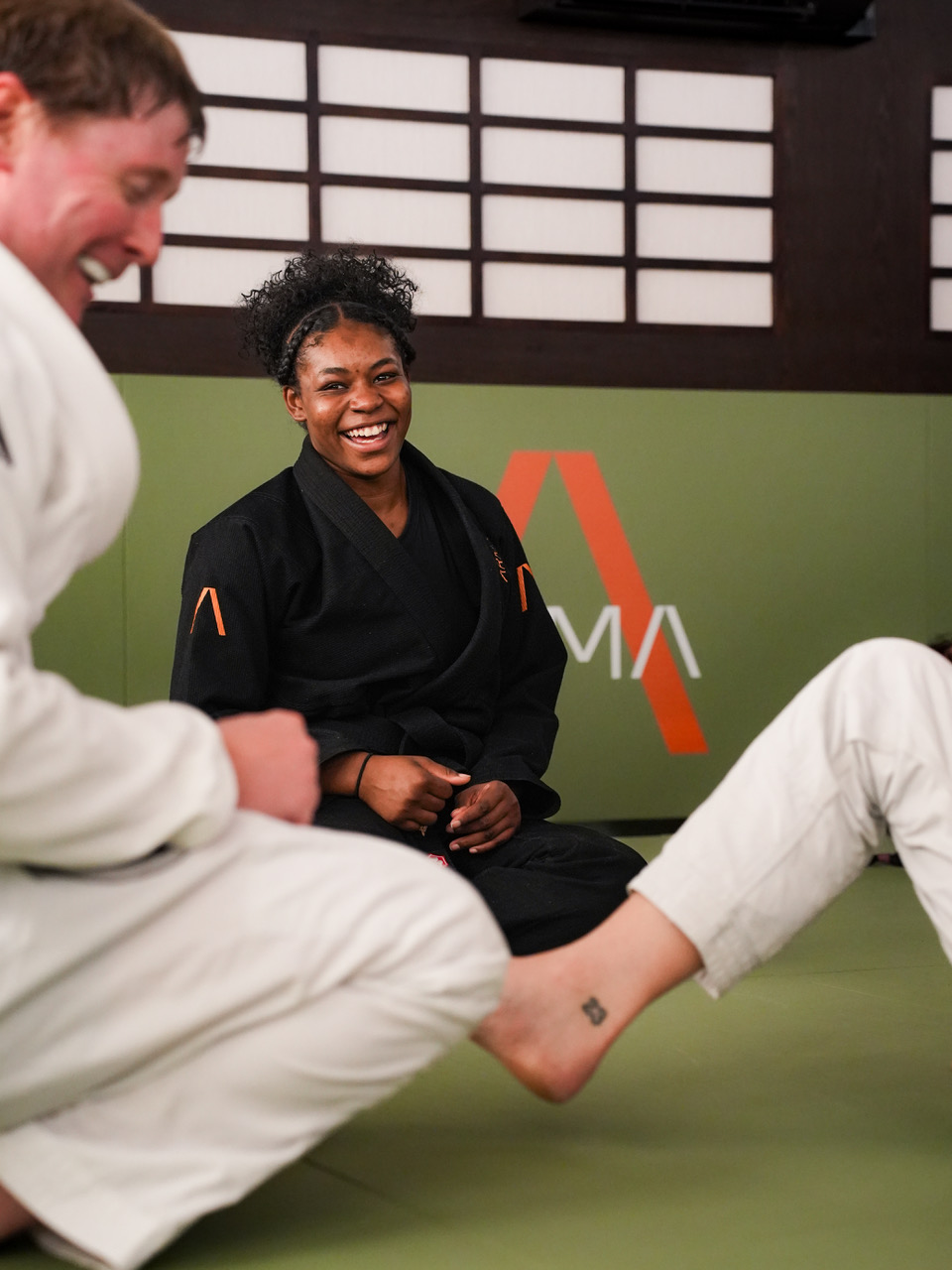
The Honest Truth: Challenges Women Face in BJJ
Let's address the parts that other gyms gloss over. We run one dedicated women's-only session, Gi Jiu Jitsu Women's Fundamentals, every Friday at 12:30pm in Dojo 1, coached by Frankie Renda, capped at 20 people. It's a space to build confidence before or alongside stepping into mixed training. Outside of that one session, classes across the week are mixed. For some women, that's uncomfortable at first. For others, it's a non-issue.
The good news? Most reputable BJJ gyms in London (including ARMA) foster a respectful, professional training environment. At ARMA, we have a safeguarding policy in place to ensure all members train in a safe, respectful environment. If a gym doesn't take safety and inclusivity seriously, don't train there.
Tip: Consider bringing a friend with you to your first session. This is a common way to reduce anxiety, ensure you're paired up with another woman, and train alongside someone you're already comfortable with.
Physical Contact is Part of Training
BJJ is a close-contact sport. You will be grappling, sweating and rolling with training partners of all sizes and genders.
If you're not used to that level of physical proximity, it can feel overwhelming at first. Give yourself time to adjust. Most women find that once they're focused on learning techniques, the discomfort fades quickly.
You're always in control. You can choose who you train with, sit out rounds when needed and communicate your boundaries clearly. Good training partners will respect that.
Strength Gaps Are Real (But Manageable)
Yes, on average, male training partners will be stronger than you. This is a biological reality, not a reason to avoid training.
The point of BJJ is to learn how to neutralise strength advantages through better technique, positioning and timing. As you progress, you'll develop strategies that allow you to control larger, stronger opponents.
In the beginning, it's frustrating. You'll get swept, submitted and overpowered repeatedly. That's part of the learning process for everyone, but it can feel more pronounced when there's a significant strength difference.
Stick with it. The skills compound over time.
You Will Be Underestimated (Use It)
Some training partners will assume you're fragile, inexperienced or not a "real" challenge. This is annoying, but it's also an advantage.
People who underestimate you are easier to catch off-guard. Let them assume what they want, then prove them wrong on the mats.
Common Questions from Women Starting BJJ
"Do I need to be fit before I start?"
No. BJJ will get you fit. Most women start with average (or below-average) fitness levels and build endurance gradually through consistent training.
You'll be tired, sore and out of breath in your first few sessions. That's normal. Rest when you need to, ask questions and focus on learning rather than performance.
"What if I'm the smallest person in the room?"
As you progress, you'll learn how to use your size to your advantage. Smaller grapplers are often faster, more mobile and harder to control than larger opponents. You're also free to choose training partners you feel comfortable with, and many women train with each other when possible.
"Will I get hurt?"
BJJ has inherent risk, like any contact sport. Injuries can happen. But they're far less common than in striking-based martial arts, team sports or even running.
Most injuries are minor (bruises, mat burn, sore muscles) and preventable through:
- Learning how to tap early (signalling submission)
- Training with controlled, respectful partners
- Listening to your body and resting when needed
- Building up intensity gradually over time
At ARMA, safety is non-negotiable. Coaches monitor all sessions, and experienced members look out for beginners.
"What if I'm not comfortable training with men?"
This is a valid concern. Some women prefer women-only classes, especially when starting out.
At ARMA, we run mixed classes where men and women train together, and we also offer a women-only Fundamentals class that some women choose to attend. We prioritise creating a respectful, professional environment where all members feel safe.
If training with men makes you uncomfortable, you can request to drill with female training partners when available, attend our women-only class, or observe until you feel ready to participate fully.
Many women find that once they start training, gender becomes less relevant than skill level, attitude and respect.
What to Expect in Your First Women's BJJ Class at ARMA
Before You Arrive
- Book a trial Beginners Cohort session via the ARMA website
- Arrive 10-15 minutes early to check in and change
- Bring comfortable gym clothes (we provide loan gis for your first session)
- Bring flip-flops and water (we provide complimentary towels)
- Remove all jewellery and tie long hair back
- Consider bringing a friend to reduce first-class nerves
During the Session
Warm-Up (10-15 minutes)
Movement drills designed to prepare your body for grappling. You'll learn how to breakfall, shrimp (hip escape), bridge and perform other fundamental BJJ movements.
Technique Instruction (20-30 minutes)
The coach demonstrates 2-3 techniques step by step. You'll drill these with a partner at a controlled pace. Coaches circulate to provide feedback and answer questions.
Positional Sparring (15-20 minutes)
Light, controlled practice where you apply techniques in a semi-live setting. As a beginner, you'll work from specific positions (e.g., starting in someone's guard) rather than full sparring.
After the Session
- Shower and change (ARMA has premium changing facilities and showers)
- Wash your gi immediately (bacteria thrives in damp fabric)
- Expect to be sore for the next 48 hours (this is normal)
Check the ARMA Timetable for Beginners Cohort class times.

How to Choose the Right BJJ Gym in London (For Women)
Not all gyms are created equal. Here's what to look for:
Safety Culture
- Do coaches actively monitor sparring?
- Is there a clear code of conduct regarding respect and harassment?
- Do women feel comfortable training there?
- Is there a safeguarding policy in place?
Visit the gym, watch a class and speak to female members if possible. Their experience will tell you everything you need to know.
Quality of Instruction
- Are techniques explained clearly with attention to detail?
- Do coaches provide individual feedback?
- Is there a structured curriculum for beginners?
At ARMA, our coaching team includes world-class instructors who prioritise fundamentals, safety and long-term progression.
Gym Culture
- Is the environment welcoming and inclusive?
- Do members support each other or compete for dominance?
- Are beginners encouraged or ignored?
You should feel welcomed from day one, not like an outsider trying to prove yourself.
Facilities
- Are the mats clean?
- Are there proper changing rooms and showers?
- Is the space well-maintained?
This matters more than you think. A gym that invests in facilities cares about the member experience.
Explore ARMA's facilities in Clapham.

Real Benefits Women Gain from BJJ (Beyond Self-Defence)
Mental Resilience
BJJ is humbling. You will lose, repeatedly, for months (sometimes years). Learning to fail, adapt and keep showing up builds mental toughness that carries into every area of life.
Community and Connection
The BJJ community is tight-knit. You'll train alongside people from all walks of life, ages and backgrounds. Many women report that their training partners become close friends.
At ARMA, the community is one of our strongest assets. Members genuinely support each other's progress.
Body Confidence
BJJ changes your relationship with your body. You stop seeing it as something to be judged and start seeing it as something capable, strong and functional.
This shift in perspective is transformative for many women who've struggled with body image.
A Skill That Deepens Indefinitely
Unlike most fitness classes, BJJ is a skill you can develop for decades. There's always more to learn, new techniques to refine and deeper levels of mastery to pursue.
This keeps training interesting and rewarding long-term.
Getting Started: Your Next Steps
If you're ready to start women's Brazilian Jiu Jitsu in London, here's what to do:
- Book a trial Beginners Cohort session at ARMA (no gi required for your first class)
- Show up 10-15 minutes early to meet the coach and get oriented
- Focus on learning, not performance
- Commit to 4-6 sessions before deciding if BJJ is for you (one session isn't enough to judge)
- Ask questions and communicate with your coaches
You can:
- Book your first Beginners Cohort session at ARMA
- Explore ARMA's membership options
- Check the timetable for class times
Final Thoughts: Is Women's BJJ Right for You?
Brazilian Jiu Jitsu isn't for everyone. It's physically demanding, mentally challenging and requires consistent effort over months and years to see real progress.
But for women who stick with it, BJJ delivers benefits that extend far beyond the mats: confidence, strength, resilience, community and the knowledge that you can protect yourself if needed.
If you've been thinking about starting, stop overthinking it. Book a trial session, show up and see what happens.
ARMA in Clapham is one of London's premier BJJ gyms, with world-class coaching, premium facilities and a welcoming community. We'd be glad to have you.